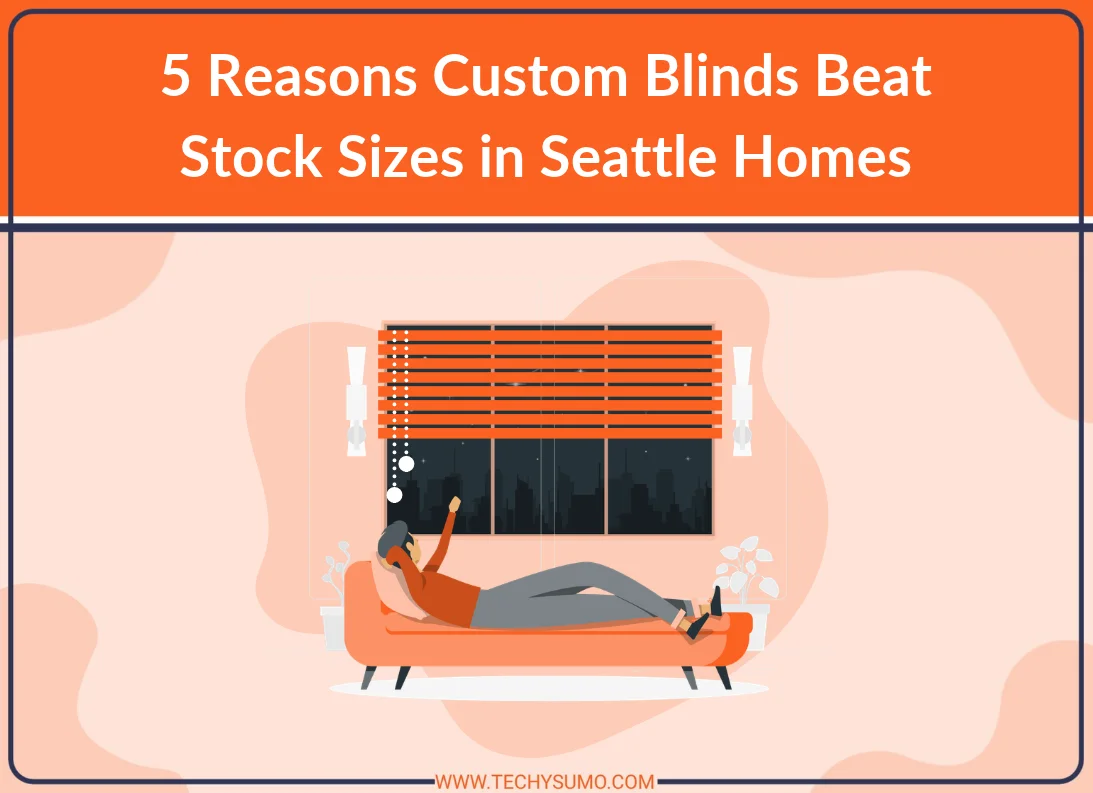
Walk into any big-box store and you will find rows of blinds in standard widths, ready to take home the same afternoon. They are convenient and inexpensive, and for a rental or a temporary fix they can be a perfectly reasonable choice. For a home you plan to live in for years, though, stock sizing often creates problems that only show up once the blinds are hanging.
Seattle and its neighborhoods add their own wrinkles. Many houses were built decades ago, windows vary in size from room to room, and the region’s gray, changeable weather means you want precise control over light. A blind that leaves a gap along the side or sits crooked in an out-of-square frame does a poor job at both privacy and glare.
Custom options solve most of those issues. If you are weighing custom blinds Seattle homeowners can order, the five reasons below explain where made-to-measure products tend to pay off, and where a local company like Stoneside can help you decide what suits each room.
Table of Contents
1. They Fit the Window You Actually Have
Stock blinds come in set widths, so you either trim, shim or accept visible gaps. Made-to-measure blinds are built to the dimensions of your window, including odd sizes, arches and large picture windows. Gaps along the edges are minimal, which improves privacy and keeps morning light from creeping in where you do not want it.
2. They Offer Better Light Control
Seattle light is soft most of the year, and then suddenly bright. Custom blinds let you choose slat widths, light-filtering fabrics or room-darkening materials based on how each room is used. A bedroom might need near blackout performance, while a home office benefits from diffused daylight that does not wash out a screen.
Also Read
3. They Can Support Energy Comfort
The U.S. Department of Energy explains that window treatments can reduce heat loss and gain when they fit snugly and are closed at the right times. A better fit means less air movement around the edges. The benefit varies by product and window, so treat it as a comfort bonus rather than a promise of lower bills. Stoneside covers custom blinds seattle in more depth if you want to keep reading.
4. They Make Safety Easier
The Consumer Product Safety Commission recommends cordless window coverings in homes where young children are present, and it highlights the issue every year through its Window Covering Safety Month messaging. When you order custom, cordless and motorized lift systems are straightforward to specify from the start, so you do not have to retrofit or accept a corded stock model.
5. They Hold Up Over Time
Material quality matters in a damp climate. Custom blinds can be built from composites, real wood or other materials chosen for the room, and hardware tends to be sturdier than what comes with budget stock options. That durability matters if you plan to stay in the house for a decade or more, since replacing cheap blinds every few years adds up.
A Quick Checklist Before You Order
Before you commit, walk through a short list. Measure or schedule measuring for every window, since sizes often vary even within one room. Decide which rooms need privacy at night and which need glare control by day. Confirm whether you want cordless or motorized operation. Ask about materials for humid rooms, and find out what the warranty covers. Having these answers in hand makes quotes easy to compare and keeps the conversation focused on what you actually need. It also gives you a baseline to hold every quote against, which makes the final decision much easier.
What About Cost?
Made-to-measure blinds usually cost more up front than stock products, and that difference is real. The case for custom rests on fit, appearance and longevity rather than on a lower sticker price. If you are covering a large number of windows, ask whether phasing the project makes sense, starting with the most visible rooms and finishing the rest over time. A clear, itemized quote helps you see exactly where the money goes and compare it fairly against stock alternatives.
Questions Worth Asking a Specialist
A good consultation should leave you with clearer answers, not more confusion. Ask how the blinds will be measured, how long production takes, and what the installation visit involves. Ask what happens if a window turns out to be out of square or a measurement needs rechecking. A company that explains these points plainly is usually one that has handled them many times before.
Choosing What Works for You
Custom does not always mean the most expensive product in the showroom. It means choosing the size, material and operation that fit the room, and paying once rather than replacing twice. Before you order, measure how light moves through each space, decide whether safety features such as cordless operation are a priority, and ask about lead times so your plans are realistic. Taking an hour to talk through these choices with an experienced local specialist often leads to a better result than guessing from a catalog, and it ensures the blinds you hang today still look right a decade from now.