
Precision and speed are both non-negotiables in laboratory settings. Even the smallest mistake can lead to delays or wasted resources when you’re running experiments, preparing assays, or handling delicate samples. Liquid handling systems are the unsung heroes in such situations. These essential mechanisms combine automation, precision tools, and smart design, to help you save time, reduce errors, and deliver trusted results.
Table of Contents
Why Liquid Handling Matters in Modern Labs
In today’s world, labs aren’t just small rooms filled with scientists and glass beakers. They’ve evolved into high-tech environments where lab automation plays a central role. A liquid handler is at the heart of this change. Instead of relying on manual pipetting, which can be tiring and error-prone, automated systems handle repetitive liquid transfer tasks with incredible accuracy.
Think about sample preparation for DNA extraction or nucleic acid preparation. Doing these manually takes hours and increases the risk of contamination. Automated systems, however, use advanced liquid handling technology, automation tips, and precision tools like diaphragm pumps to perform tasks consistently and at scale. These technologies enable experiments to move faster, with higher confidence in the outcome.
Tools That Make It Possible
What makes a liquid handling system so effective is the variety of tools and technologies built into it. Each one is designed to solve specific challenges you might face during experiments.
- Pipette tips and accessories: From disposable tips to low dead volume reagent reservoirs, these consumables reduce waste and contamination while supporting precise transfers.
- Liquid dispensers: Useful for handling large volumes, they simplify repetitive tasks.
- Positive displacement pipettes and air displacement technology: Depending on whether you’re working with viscous or volatile liquids, you can choose between positive displacement technology for accuracy or air-based systems for efficiency.
- Diaphragm and microdiaphragm pumps: These are vital for moving liquids with steady flow in sensitive systems.
- Anti-sealing arrays, heater-cooler plates, and automatic pipette tools: Designed to enhance assay performance and reduce common lab headaches.
Combining these tools into a single liquid transfer system has multiple advantages. Labs can achieve error-free pipetting, maintain cell viability in cell culture media, and streamline assay development across life sciences research.
Also Read


Applications in Scientific Research
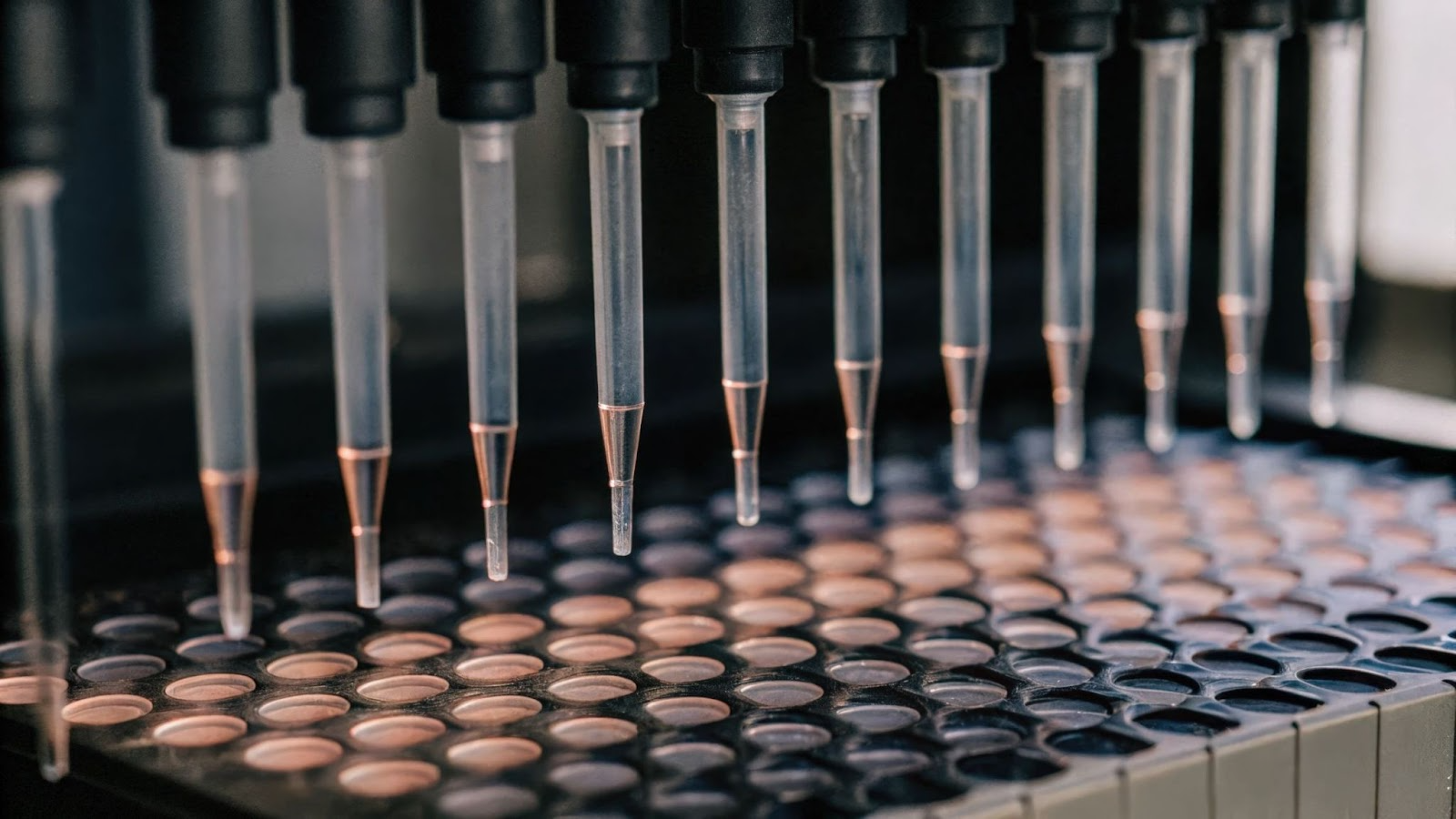
These systems are everywhere in scientific research, from cell culture studies to microarray experiments. Consistency is critical when preparing samples for solid phase extraction or liquid-liquid extraction. A small deviation in volume can affect the whole result. With automation, the microlab prep and related processes run seamlessly, ensuring reproducibility across dozens, or even hundreds, of samples.
Another key area is assay development. High-throughput testing requires exact volumes to be dispensed repeatedly. Here, an automated liquid handling platform proves invaluable by offering reliability and scalability. In cancer diagnostics, for instance, liquid biopsy relies heavily on accurate handling during nucleic acid preparation, where even a single misstep can change the outcome.
Reducing Errors and Saving Time
One of the biggest advantages of adopting liquid handling systems is reducing human error. Manual pipetting introduces risks like inconsistent volume transfer or cross-contamination from reused tips. You reduce these risks significantly with automated sampling and automation experts guiding system design.
For instance, positive displacement technology paired with disposable tips ensures accurate handling of viscous samples. Similarly, using centrifuge tubes and properly designed reservoirs avoids sample loss. Add-ons like virtual start-up support also make it easier for your team to get comfortable with new systems quickly.
The Role of Automation in Efficiency
Automated workstations have revolutionized how laboratories operate. Modern labs rely on automated pipetting systems to set up workflows that once took days and now complete in hours. The integration of a robotic arm, for example, allows high-throughput processing for applications like next-generation sequencing and liquid biopsy. Both require careful handling of micro- or nanoliter volumes.
Automation doesn’t just improve speed. It also supports compliance with regulatory standards. Features like automated calibration ensure that each instrument stays within strict accuracy guidelines. When combined with cloud data storage, labs can track results, ensure consistency, and demonstrate compliance more easily.
How It All Comes Together
The automated liquid handling platform doesn’t replace scientists. Instead, it frees you up to focus on more critical thinking and data analysis. You can focus on designing better experiments or interpreting results as a result.
An automated pipetting robot working alongside liquid dispensers, automation tips, and positive displacement pipettes ensures seamless sample preparation. The addition of heater-cooler plates keeps cell culture conditions optimal, while advanced liquid handling technology supports complex workflows like next-generation sequencing.
This harmony between humans and machines is what allows life sciences research to advance quickly while still meeting strict regulatory standards.
Final Thoughts
In the past, lab work was often slow, repetitive, and prone to human error. But with liquid handling systems, the game has changed. Numerous tools now support efficient workflows that ensure trusted results every time.
Research organizations embracing lab automation can improve accuracy, protect samples, and ensure that their work stands up to scrutiny. This holds whether they’re working on cell culture, running DNA extraction, or exploring cutting-edge fields.
Investing in these systems and working with automation experts gives teams the best chance at consistent outcomes, efficient processes, and reliable discoveries that push scientific research forward.