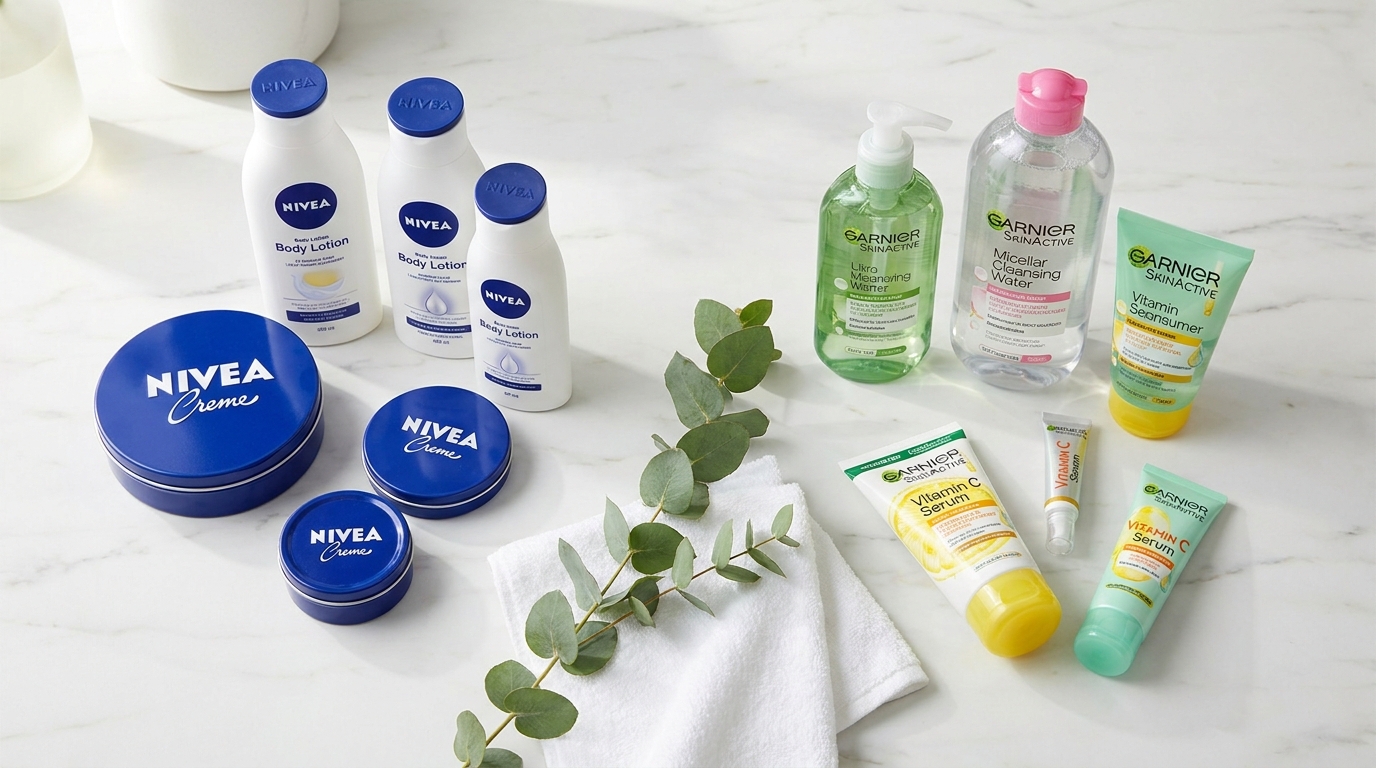
Stepping into the skincare aisle for the first time can feel like staring at a wall of foreign languages. With hundreds of products, countless promises, and conflicting advice everywhere, it’s easy to freeze up. If you’ve found yourself asking, “I’m a skincare beginner. Is Nivea a good starting brand compared to Garnier?” — you’re asking exactly the right question.
Both brands are household names, affordable, and readily available at any drugstore. They’re natural entry points for anyone new to skincare. But they approach skincare very differently. This article breaks down everything you need to know to make the right choice for your skin.
Table of Contents
- At a Glance: The Short Answer
- Understanding Both Brands
- Cleanser Comparison: Where It All Begins
- Moisturizer Comparison: The Heart of the Routine
- What Does Your Skin Type Say?
- Ingredient Philosophy: Simple vs. Sophisticated
- Price and Accessibility
- Common Beginner Questions
- Final Verdict: Which Should You Choose?
At a Glance: The Short Answer
The bottom line: If you have dry or sensitive skin, start with Nivea. If you have combination or oily skin, Garnier often wins. But let’s dig deeper.
Understanding Both Brands
Nivea: The Hydration Specialist
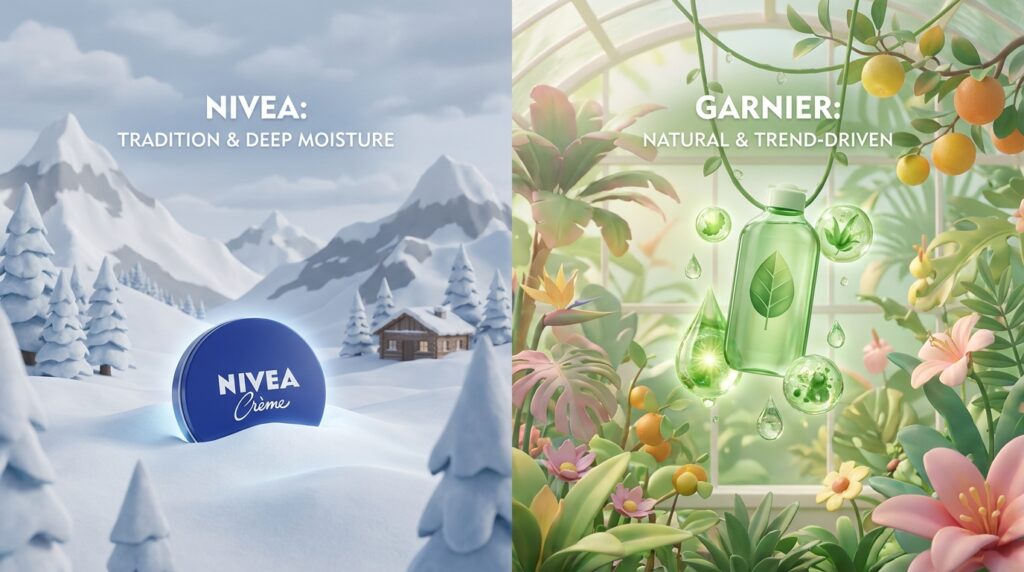
Nivea built its reputation on one thing: moisturizing. The iconic blue tin has been a bathroom staple for over a century, and its core formula has barely changed. The brand is owned by Beiersdorf, a German company with deep roots in dermatological research.
Nivea’s approach is minimalist. They don’t chase every skincare trend. Instead, they focus on creating products that hydrate, protect, and feel comfortable on the skin without complicated ingredients. The classic Nivea cream is an occlusive moisturizer—it creates a protective film on the skin that prevents water loss, making it exceptionally effective for dry, chapped, or compromised skin.
Also Read


What Nivea does well:
- Deep, long-lasting hydration
- Barrier repair and protection
- Gentle, non-irritating formulas
- No-fuss, proven classics
What Nivea lacks:
- Modern “active” ingredients like ceramides, niacinamide, or hyaluronic acid in their core range
- Variety in targeted treatments (acne, brightening, anti-aging)
Garnier: The Trend-Driven All-Rounder
Garnier, owned by L’Oréal, positions itself as a natural-inspired brand that uses plant-derived ingredients and botanical extracts. They’re constantly launching new products that tap into current skincare trends—from vitamin C serums to BHA sunscreens to sheet masks.
A beauty editor with 15 years of experience describes Garnier as a brand that “delivers every time” — with smart ingredients, great textures, and consistently impressive results at affordable prices. Garnier’s product range is vast, with different lines targeting specific concerns: acne, dullness, aging, sensitivity, and more.
What Garnier does well:
- Wide variety of targeted products
- Lightweight, modern textures
- Incorporation of trendy ingredients (vitamin C, BHA, niacinamide)
- Excellent micellar water range
What Garnier lacks:
- Rich, deeply nourishing options for very dry skin
- Some formulas contain fragrance or ingredients that may irritate sensitive skin
Cleanser Comparison: Where It All Begins
Every skincare routine starts with cleansing. Here’s how the two brands compare.
Nivea cleansers tend toward the creamy side. They’re gentle, don’t strip the skin, and remove makeup without leaving your face feeling tight. If you have dry or sensitive skin, these are a safe bet.
Garnier cleansers offer more variety. You’ll find gel cleansers for oily skin, micellar water for gentle removal, and cream cleansers for dry skin. Their micellar water line is particularly famous—it’s a global bestseller.
Micellar Water Showdown
Micellar water is often a beginner’s first skincare product. Both brands offer excellent options, but they shine in different areas:
- Garnier excels in raw cleansing power. Their pink cap version (for sensitive skin) is infused with rose water and glycerin, and is fragrance-free. The blue cap removes waterproof makeup effectively. Garnier’s micellar water is “one of the most-recommended drugstore cleansers in dermatology”.
- Nivea shines in skin compatibility and simplicity. Their formulas are consistently gentler, especially for sensitive or acne-prone skin seeking a no-fuss option. Nivea’s micellar water is free from alcohol and perfume, making it very unlikely to cause irritation.
Expert insight: Skincare specialist Christina Korouchtsidi notes that “the best micellar waters balance efficacy with gentleness. You want something that removes stubborn mascara without stinging your eyes or disrupting your skin barrier”.
Moisturizer Comparison: The Heart of the Routine
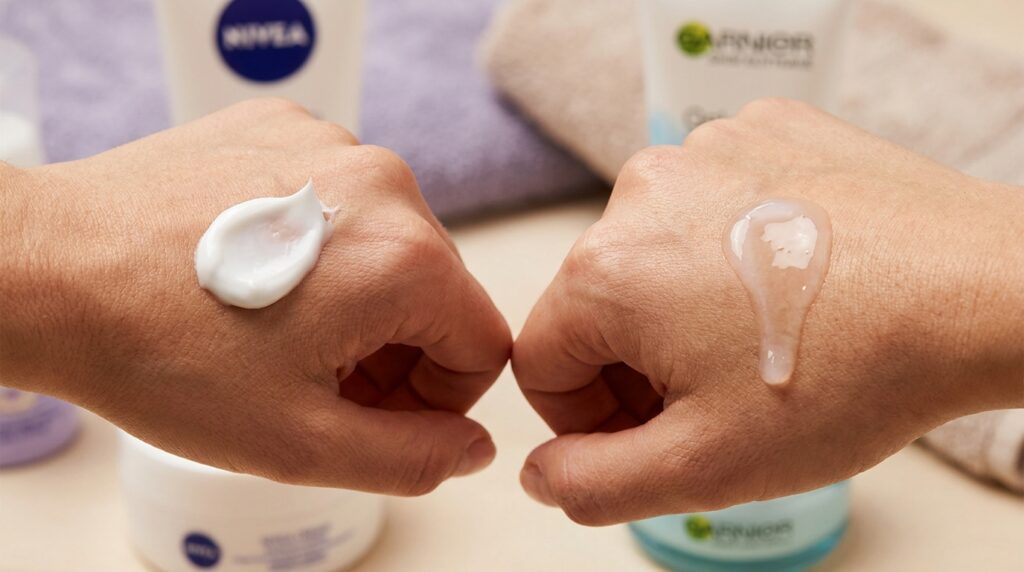
This is where the brands truly diverge.
Nivea’s moisturizers are rich and protective. The classic blue tin cream contains glycerin, shea butter, liquid paraffin, and wax—ingredients that create a barrier and lock in moisture. Dermatologists describe it as “a safe bet” for hydration. Clinical studies show significant improvement in skin hydration after regular use. It competes “without complexes with much more expensive creams”.
However, this richness comes with a trade-off. The classic Nivea cream is heavy. It’s fantastic for dry hands, elbows, and heels, but may feel too greasy for the face—especially if you have oily or combination skin. Dermatologists note that it “does not suit all skin types” and “may be too heavy for some users, especially those with oily or acne-prone skin”. The brand does offer lighter options like Nivea Soft, which absorbs more easily and leaves skin non-greasy.
Garnier’s moisturizers are lightweight and modern. Their textures are described as “fun” and “genuinely effective at mattifying” — keeping skin hydrated without the shine. They often include trendy ingredients: one day cream features real niacinamide as a primary active with supporting vitamin C.
What Does Your Skin Type Say?
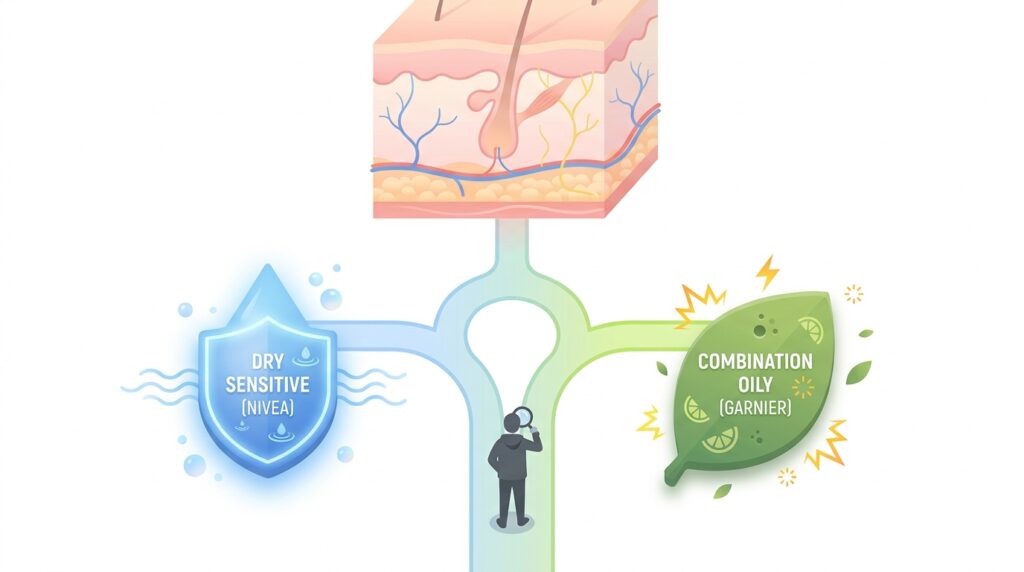
This is the most important question you can ask yourself. “I’m a skincare beginner. Is Nivea a good starting brand compared to Garnier?” — the answer depends entirely on your skin.
Choose Nivea If:
- You have dry or very dry skin that feels tight, flaky, or rough
- Your skin is sensitive and reacts poorly to fragrances or complex ingredients
- You prefer minimal ingredient lists and no-fuss formulations
- You want classic, proven products that have stood the test of time
- Your skin barrier is compromised (from over-exfoliation, weather damage, or conditions like eczema)
Choose Garnier If:
- You have combination or oily skin that needs hydration without heaviness
- You’re looking for lightweight hydration
- You’re interested in botanical or plant-derived ingredients
- You want targeted solutions for specific concerns like acne, dullness, or aging
- You enjoy trying new products and keeping up with skincare trends
Ingredient Philosophy: Simple vs. Sophisticated
Nivea’s classic formulations are effective but old-school. They contain ingredients like mineral oil, paraffin, and waxes—substances that dermatologists have trusted for decades but that lack the “glamour” of modern actives. As one analysis put it: “No exfoliating acids, no retinoids, no cutting-edge antioxidants. And that, far from being a flaw, explains its main function”.
Garnier, by contrast, actively incorporates modern ingredients. Their products feature:
- Vitamin C for brightening
- BHA (salicylic acid) for clear skin
- Niacinamide as a primary brightening active
- Hyaluronic acid for hydration
The trade-off: More ingredients mean more potential for irritation. Some Garnier products contain denatured alcohol and fragrance that may be problematic for sensitive or reactive skin. The comedogenic fatty acid load in some formulas can also limit use for acne-prone skin.
Price and Accessibility
Both brands sit firmly in the drugstore category. Prices are similar, making cost not really a deciding factor between them. You can get excellent products from either brand at affordable prices.
Nivea is often slightly more accessible for a wider consumer base, with generally more attractive pricing. But the difference is marginal—both are budget-friendly options that deliver good value.
Common Beginner Questions
Can I use both brands together?
Absolutely. There’s no rule that says you must stick to one brand. Many people use Garnier’s micellar water to cleanse and Nivea’s cream to moisturize. Mix and match based on what works for your skin.
Which brand is better for acne?
Garnier has more targeted options for acne-prone skin, including their Pure Active line with salicylic acid. Nivea’s classic creams may be too heavy for acne-prone skin, though they do offer some cleansers designed for blemish-prone skin.
Which brand is better for sensitive skin?
Nivea generally wins for sensitive skin. Their formulas are simpler, with fewer potential irritants. However, Garnier’s pink cap micellar water is also a good option for sensitive skin.
Do I need to use both a cleanser and moisturizer?
Yes. At minimum, every skincare routine needs:
- A gentle cleanser to remove dirt and oil
- A moisturizer appropriate for your skin type
- Sunscreen for daytime protection
Start with these three. Add more later if you want to address specific concerns.
What about sunscreen?
Both brands offer sunscreens. Garnier’s BHA + Niacinamide Daily UV SPF50 is particularly well-regarded—it protects while helping keep skin clear and smooth. Nivea also offers sun protection, though their focus remains on moisturizing.
Final Verdict: Which Should You Choose?

I’m a skincare beginner. Is Nivea a good starting brand compared to Garnier? The answer is yes—but it depends on who you are.
Start with Nivea if:
- Your skin feels dry, tight, or sensitive
- You want a simple, no-fuss routine
- You prefer proven classics over trendy ingredients
Start with Garnier if:
- Your skin is oily, combination, or normal
- You want to address specific concerns (acne, dullness, etc.)
- You enjoy variety and want to experiment with different product types
The good news? Neither brand will damage your skin if you choose wrong. Both have been making skincare for decades and focus on safety and effectiveness. The difference is simply which formulations work better for your specific skin.
Start simple. Listen to your skin. And remember—the best skincare routine is the one you’ll actually stick to.