Being visible to your prospects is the key to sustainable growth. And being visible to them in your specific area of operation is the key to driving both online and offline traffic straight to your doorstep.
Local SEO is the digital marketing strategy that deals with visibility. It aims to make you rank in local SERPs, so that your business appears in front of potential buyers when they are looking for products or services nearby. It combines a diverse set of tactics. Yet, local SEO citations are the foundation.
What are citations in SEO, and how do you earn them? Let’s answer these questions!
Table of Contents
- What Are Local SEO Citations?
- Start With a NAP Profile
- Clean, Claim, and Create Your Core Listings
- Optimize Your Core Listings for Maximum Visibility and Engagement
- Create Citations on Authoritative Platforms
- Add Unstructured Citations to Strengthen Credibility
- Prevent Citation Errors That Damage Local SEO
- Implement Ongoing Performance Tracking and Optimization
- Conclusion
What Are Local SEO Citations?
Local citations are online mentions on external platforms. But it’s not just any mention. To qualify for a local mention, you need to specify your NAP details:
- The name of your business
- Address
- Phone number
Why does it matter? Online mentions perform three key functions:
Also Read


- They amplify your visibility. Google’s bots crawl the web for information about your company. Accurate and consistent mentions help them verify that your business exists and allow them to confirm its location. As a result, you appear on the map and in “near me” searches.
- They build credibility. Consistent and accurate mentions signal that your business is trustworthy. Respectively, they grow your credibility and trust rate.
- They help you reach prospects with a strong intent. People typically use local search when they have already made a decision to buy something and want to find a nearby business that can meet their needs. If you find them at this time, you can win more foot traffic, phone calls, and sales.
Now, let’s see how to build SEO local citations for your brand.
Start With a NAP Profile
Accuracy and consistency are the two pillars of local citations. When your mentions across the web contain different details, it’s confusing both search engines and users. It hinders your professional image and trust. Which is why you have to start by building a uniform NAP profile:
- Name: If you have a few name versions, for example, if your company has been renamed at some point, you have to designate a single official version.
- Address: Designate an accurate current address of your office/store. Also, pick a single format for your address. Decide if you’ll use full designations (e.g., “Street”) or their shortened versions (e.g., “St.”).
- Phone number: Specify your current business number. Also, choose the preferred format.
Document the updated NAP details somewhere, so that you have them centralized and accessible.
Clean, Claim, and Create Your Core Listings
When you have a centralized NAP profile, you need to ensure that all your listings include clean data. Start with the core listings:
- Google Business Profile (GPB)
- Apple Maps
- Bing Places
If You Have Profiles
If you already have profiles in the core listings and own them, conduct an audit. Update all inconsistent or outdated details according to your NAP profile.
If You Have Profiles That Are Out of Your Ownership
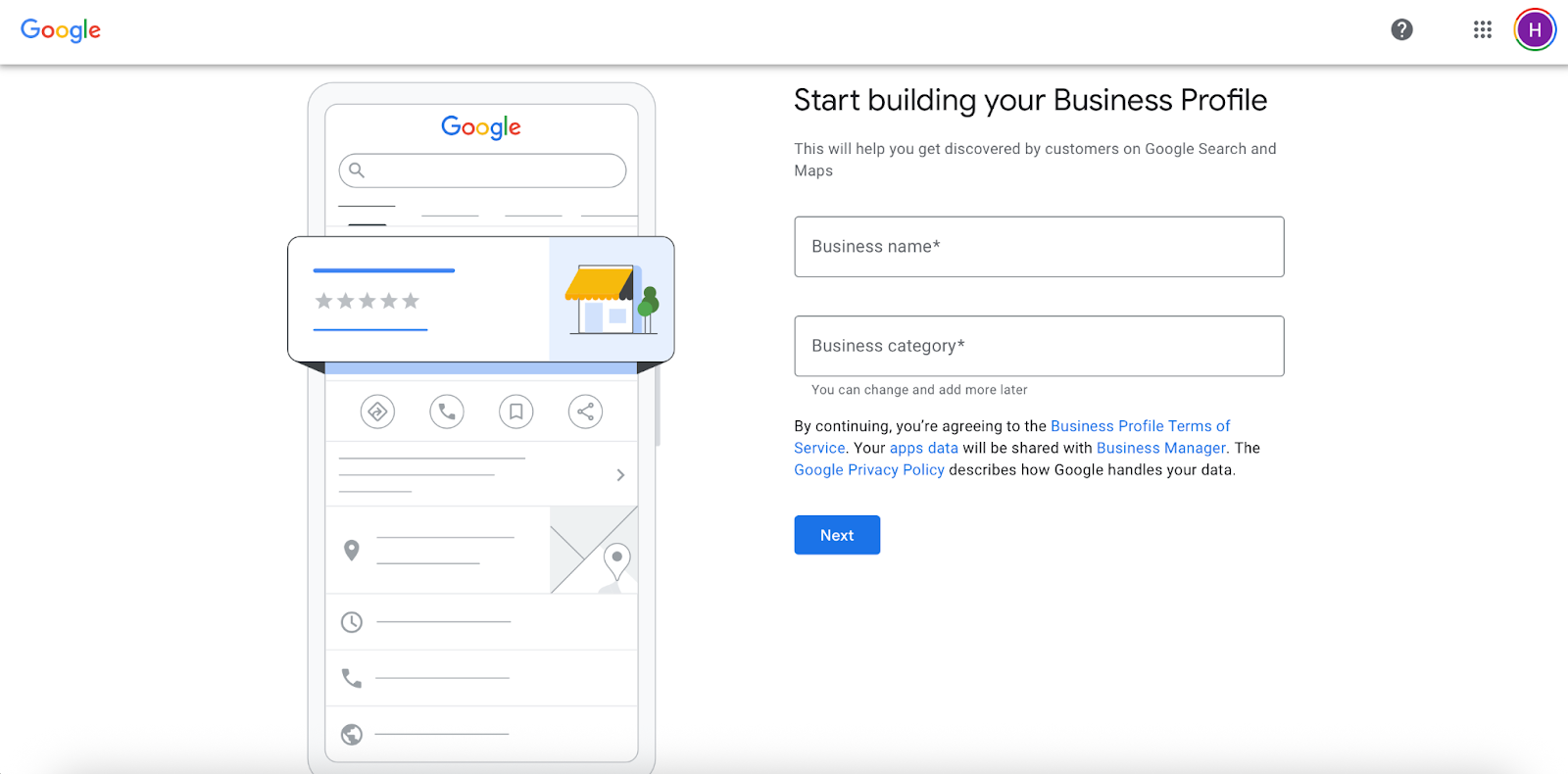
If you can find your business in these listings but don’t own them, you need to claim them. Here’s how to do it with Google local citations:
- Find your company’s profile.
- Click Request Access.
- Submit the form.
If You Don’t Have Profiles
If your company is not yet listed in one or all of the core listings, you need to fix this. Create dedicated profiles in each and fill them with clean NAP details.
Optimize Your Core Listings for Maximum Visibility and Engagement
Now you have all the core listings and own them. Carry on and optimize each for greater visibility. Firstly, make sure you add additional business data, such as:
- Business type
- Category
- Areas of operation
- Working hours
- Services/products
- Description
Add as much information as you have. This will let better search engines understand your business. And it will give more data to your prospects.
Secondly, target high-volume and low-competition geo-focused keywords to insert them in your descriptions. This helps improve ranking. But do it as naturally as possible.
Lastly, optimize your profiles for greater engagement:
- Add high-quality images and videos.
- Encourage customer reviews and manage them.
- Use advanced features to get noticed. For example, make Posts in your Google Business Profile or include custom actions (e.g., Reserve, Tickets, Order, etc.) to Apple Maps.
- Create custom Q&A sections where possible. This can stimulate better conversions. Q&As give prospects more data to explore. Respectively, they will get to know your brand better, which can include the likelihood of them coming to you. And there is another benefit. Q&As are a perfect space to target question-based keywords. These are essential for appearing in AI search results. You can use tools like aimodetracker.com to analyze AI responses and find ways to expand your visibility into these results.
Create Citations on Authoritative Platforms
Once done with core listings, start building SEO local citations beyond them. Here, reputation is all that matters. You need to research popular and trusted directories where you can list your brand. You can consider all types of directories, including:
- General major directories.
- Geo-specific platforms.
- Industry-specific platforms.
It can help to watch how your competitors do it to make an extensive list of platforms that you can use. When you define trusted directories, create profiles in them using your NAP profile and target keywords.
General Business Directories
- Yelp
- Yellowbook
- Better Business Bureau
- Whitepages
- Superpages
- Citysearch
- Local.com
When building your citations, you want to span as many platforms as possible. However, remember the key principles – ensure each platform’s relevancy and authoritativeness to gain positive results.
Add Unstructured Citations to Strengthen Credibility
When it comes to online mentions, there are actually two types of them. The first one is structured, and it’s exactly what we’ve discussed previously – centralized mentions that come from listings and business directories. And then, there are also unstructured mentions. These are ones that come from news sites, blogs, and similar sources.
Clearly, you want to go beyond the basics like Yelp and Google Maps citations for local SEO success. If you diversify your mentions with unstructured ones, this will give you additional visibility and authority. So, don’t neglect it.
Combine different strategies to earn unstructured citations:
- Create high-value, location-specific content that other creators will want to share.
- Publish unique reports and studies that will get you noticed.
- Provide journalists with authoritative industry insights to get featured.
- Pitch press releases to news sites.
- Use guest posting to build citations manually.
Prevent Citation Errors That Damage Local SEO
Although online mentions can feel a bit confusing at first, earning them really isn’t that hard. However, never go for quantity over quality. If you want to get the most out of every citation for SEO, watch out for these common mistakes that undermine your effort:
- Inconsistencies in NAP details. Even small errors, such as a typo or wrong address format, harm your SEO.
- Duplicate listings on the same platform. Duplicate content confuses search engines and dilutes trust.
- Incomplete profiles. All additional details, photos, and custom features give you extra opportunities to engage and convert prospects.
- Missed directories. Ignoring authoritative geo-specific and industry-specific directories doesn’t let you reach your full visibility potential.
- Lack of local keywords and geo-specific content. Along with your citation-building efforts, general local SEO tactics will help you reach maximum outcomes.
- Poor website SEO. Many people who find you in local search will likely visit your website. Common mistakes like slow loading speed or poor mobile experience will make them leave and forget about your business.
- No updates. Sometimes, your information changes. You may adjust your working hours during specific times or change areas of service when you enter new markets. Failing to update these changes across different platforms will lead to confusion. As a result, poor customer experience and lower rankings.
Implement Ongoing Performance Tracking and Optimization
After you build local SEO citations, focus on tracking the outcomes. Leverage local SEO tools for automation and track how citations affect your SEO results. In particular, watch how your rankings and website traffic change after you earn more mentions. Also, watch the number of GBP insights, reviews, and leads.
Use insights to create continuous improvement and achieve even bigger results in the long run. And don’t forget to consistently audit all your mentions for consistency. Use automation tools to scan through all directories and platforms without human effort and make prompt updates as soon as some details become outdated.
Conclusion
Local business management can be filled with challenges. Trying to adopt new technology. Defining the right marketing approach. And handling customer acquisition. To name a few. Yet, the biggest challenge is trying to navigate a competitive market and ensuring growth.
As you now know, search engine optimization and local search citations, in particular, might be the answer to your challenges. Accurate citations foster trust. Trust, in turn, gets you visible in SERPs. As a result, your business stands out from the competition and attracts customers. Don’t miss this chance!