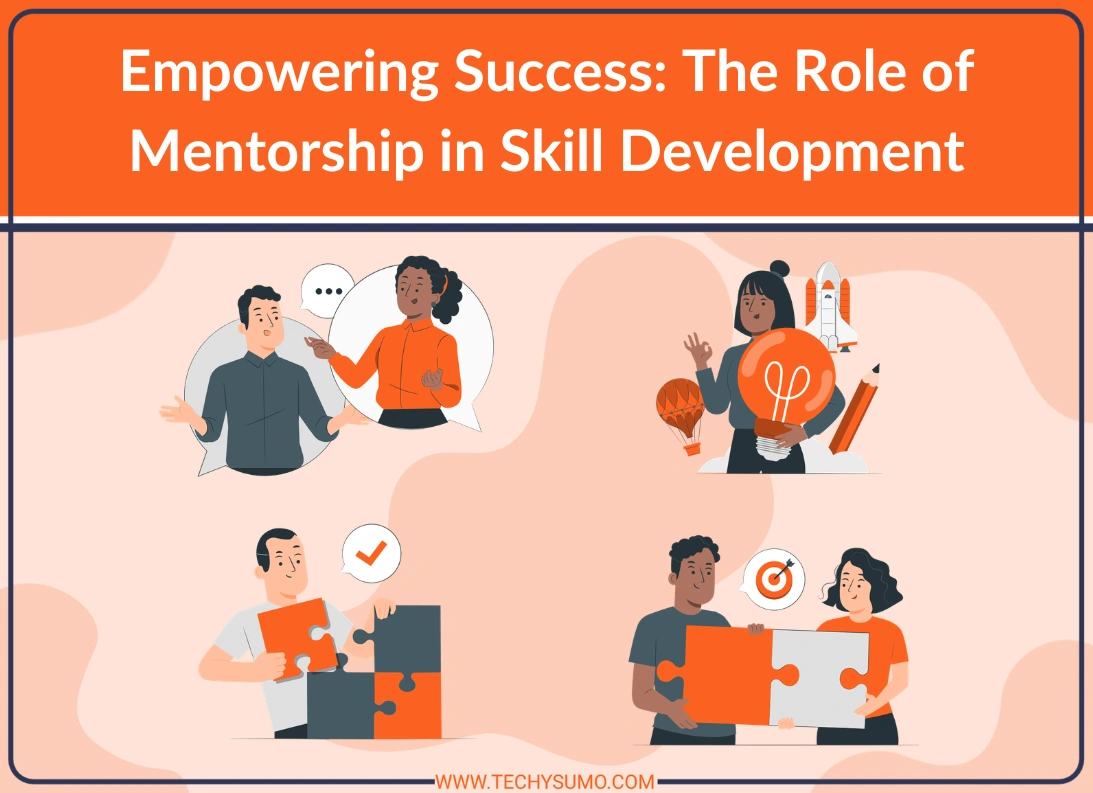
Mentorship plays an important role in professional skill development across industries. It gives people access to practical guidance, real workplace experience, and feedback that formal training alone often cannot provide.
A strong mentor can help someone improve technical skills, communicate more clearly, solve problems with more confidence, and prepare for leadership responsibilities.
This article explains how mentorship supports hard and soft skill growth, how it connects to career development, and why structured mentoring programs can improve employee performance, retention, and long-term organizational strength.
Table of Contents
Core Skills Boosted Through Mentorship
Mentorship supports skill development by connecting learning with real experience. Instead of relying only on courses or manuals, mentees can ask questions, test ideas, and learn from someone who has already faced similar challenges.
This type of guided learning helps people build confidence while improving both job-specific and interpersonal skills.
Also Read

Technical and Job-Specific Skills
Mentors with industry experience can share practical knowledge about tools, processes, standards, and best practices that matter in a specific role. This kind of support helps bridge the gap between theory and day-to-day work.
A mentor might help a junior employee improve debugging techniques, understand client management expectations, review regulatory requirements, or approach a complex project with better structure.
The value comes from learning in context. Mentees are not just reading about a concept. They are applying it with guidance from someone who understands the work.
This targeted development is especially useful because every role has different demands. Generic training can provide a foundation, but mentorship helps people refine the skills they need for their actual responsibilities.
Structured mentoring platforms such as MentorCity help organizations connect mentors and mentees based on goals, experience, and development needs, making skill-building relationships easier to manage and measure.
Communication and Interpersonal Abilities
Mentorship also strengthens communication. Mentees learn how to listen actively, ask better questions, explain ideas clearly, and respond to feedback in a professional way. These skills are often learned through observation and practice rather than formal instruction.
Active listening is especially important. Research from The Workforce Institute at UKG found that 74% of employees feel more engaged when they believe their voices are heard.
Mentors can model this behavior in conversations and help mentees apply it in team meetings, client discussions, and performance reviews.
Mentors also support empathy and emotional intelligence. By talking through workplace situations, mentees learn how to understand different perspectives, manage conflict, and build stronger relationships.
This type of feedback is often more useful than one-time communication training because it is tied to real experiences.
Problem-Solving and Critical Thinking
Problem-solving improves with exposure to different situations. Early-career professionals may struggle with complex decisions simply because they have not seen enough examples yet. Mentors shorten that learning curve by sharing experience, asking useful questions, and helping mentees think through possible outcomes.
Critical thinking develops when people learn to assess situations, compare options, and review their own work honestly. A mentor can provide frameworks for identifying risks, setting priorities, and making decisions under pressure.
Mentorship also builds adaptability. When mentees discuss challenges with someone more experienced, they learn how to respond to change without becoming overwhelmed. Over time, this improves confidence and helps them approach unfamiliar problems with more structure.
Leadership and Decision-Making Capabilities
Leadership skills often develop through practice, reflection, and feedback. Mentors can help future leaders improve strategic thinking, delegation, team communication, and decision-making.
They can also explain the less obvious parts of leadership, such as managing competing priorities, motivating different personalities, and handling difficult conversations.
A mentor may help a mentee prepare for a promotion, review a team challenge, or think through the tradeoffs behind a major decision. This guidance gives future leaders a safer space to test their thinking before applying it in higher-stakes situations.
Emotional intelligence is also central to leadership. Mentors can help mentees understand how their communication style affects others and how to build trust with teams. These lessons often have long-term value as employees move into more senior roles.
Time Management and Organizational Skills
Time management affects productivity, stress, and goal achievement. Mentors can help mentees decide which tasks matter most, reduce distractions, and create realistic plans for completing work.
They may introduce simple tools such as time blocking, weekly planning, or the Eisenhower Matrix for separating urgent tasks from important ones. They can also help mentees recognize when they are overcommitting or spending too much time on low-value work.
Regular check-ins create accountability. When mentees know they will discuss progress with a mentor, they are more likely to follow through on commitments and adjust their habits when needed.
Career Development and Mentorship Connection
Career growth requires more than performing well in a current role. People also need to understand where they want to go, what skills they need next, and how to make thoughtful career decisions.
Mentorship is valuable because it gives employees a trusted person to help them think through these choices.
Managing Career Transitions
Career transitions can be difficult because each new role or environment brings different expectations. Moving from an individual contributor role into management, for example, often requires a shift from technical execution to team leadership. A mentor can help the employee understand those changes before problems appear.
Lateral moves into a new department, industry, or function can also create uncertainty. Skills from one role may not transfer perfectly into another. Mentors who have made similar moves can explain what to expect, which mistakes to avoid, and which skills deserve early attention.
Mentors also provide emotional support during change. Promotions, restructures, new managers, or organizational shifts can affect confidence. Having someone to discuss these situations with can help employees make steadier decisions.
LinkedIn’s Workplace Learning Report found that 94% of employees would stay at a company longer if it invested in their career development. That figure shows why mentorship is closely tied to both employee growth and retention.
Building Professional Networks
Mentorship can also expand a mentee’s professional network. Mentors often have broader industry relationships and can introduce mentees to colleagues, peers, leaders, or professional groups that support future opportunities.
These introductions can help mentees learn about new roles, understand industry expectations, and build credibility. Networking through mentorship is often more meaningful than casual outreach because it grows from an existing relationship of trust.
For organizations, this can increase internal visibility. Mentees may gain exposure to departments, leaders, or projects they would not otherwise encounter. This broader awareness can support career mobility and stronger employee engagement.
Setting and Achieving Career Goals
Mentors help mentees turn broad ambitions into clear goals. Instead of saying they want to “grow” or “move up,” mentees can define specific milestones, skills, and actions.
A mentor might help someone decide whether to pursue a leadership role, develop a technical specialty, change departments, or take on a stretch assignment. They can also help mentees understand the tradeoffs involved in each choice.
Accountability matters here as well. Regular mentoring conversations encourage employees to review progress, adjust plans, and stay focused. The benefits of mentorship become especially clear when someone is making an important career decision and needs practical, honest guidance.
Benefits of a Mentorship Program for Organizations
Structured mentorship programs can create measurable value for organizations. They support employee growth, improve knowledge sharing, and help companies develop stronger internal talent pipelines.
Improved Employee Performance
Mentorship can improve performance by reducing uncertainty and helping employees make better decisions. When people have access to experienced guidance, they can avoid common mistakes, solve problems faster, and produce stronger work.
Mentored employees may also become more confident in their roles. This can improve collaboration, communication, and initiative.
Over time, these gains can spread across teams as employees apply what they learn and share knowledge with others.
For organizations, the result is a workforce that learns faster and performs with more consistency.
Reduced Turnover Costs
Employee turnover is expensive. Recruiting, onboarding, training, and lost productivity can place a heavy burden on organizations. Mentorship helps address this issue by giving employees clearer support and stronger development opportunities.
When employees feel that their growth matters, they are more likely to stay engaged. Mentorship also helps newer employees build relationships inside the organization, which can reduce isolation and improve retention.
Even a modest reduction in turnover can create meaningful savings. For example, if an organization has 200 mentoring participants with an average salary of USD 70,000, reducing turnover by 15% could protect a significant amount in replacement and productivity costs.
Developing an Internal Leadership Pipeline
Mentorship helps organizations identify and develop high-potential employees. Instead of relying only on external hiring, companies can prepare internal candidates for future leadership roles.
Mentors can guide employees through the skills needed for management, including communication, delegation, decision-making, and strategic thinking. This helps employees prepare before they formally step into leadership positions.
A stronger internal pipeline also supports continuity. Future leaders already understand the organization’s culture, systems, and goals, which can make transitions smoother.
Improved Organizational Knowledge Retention
As experienced employees move into new roles or retire, organizations risk losing valuable knowledge. Mentorship helps transfer that knowledge before it disappears.
This includes practical insight that may not be captured in documents, such as how decisions are made, how clients are handled, which processes work best, and where common problems arise.
Pairing experienced employees with newer ones helps preserve this knowledge and maintain operational stability.
Building an Effective Mentorship Program
A successful mentorship program needs more than good intentions. Organizations need clear goals, thoughtful matching, useful resources, and consistent follow-up.
Defining Clear Program Objectives
Every program should begin with a clear purpose. Some organizations use mentorship to improve onboarding. Others focus on leadership development, retention, diversity and inclusion, or technical skill growth.
Clear objectives make the program easier to measure. For example, an organization might aim to improve retention among early-career employees, increase internal promotions, or support new managers during their first year.
These goals should be specific enough to guide program design.
Matching Mentors and Mentees Strategically
The quality of mentor matching has a major effect on program success. Strong matches are based on career goals, skills, experience, communication style, and availability.
Poor matches can lead to low participation or weak outcomes. Organizations should use a structured matching process and allow both mentors and mentees to understand expectations before the relationship begins.
Providing Structure and Resources
Mentoring relationships work best when participants have guidance. Templates, discussion prompts, goal-setting worksheets, and first-session guides can help mentors and mentees use their time well.
Structure is especially useful for people who are new to mentoring. It gives them a starting point while still allowing the relationship to develop naturally.
Measuring Success and Program Impact
Organizations should track participation, satisfaction, and outcomes over time. Useful measures may include retention, promotion rates, engagement scores, skill development progress, and feedback from mentors and mentees.
Regular measurement helps leaders see what is working and where the program needs improvement. It also helps build internal support by showing the value of mentorship in practical terms.
Supporting Mentors with Training
Strong professionals do not automatically know how to mentor well. Organizations should train mentors on active listening, giving feedback, setting goals, and supporting mentees without taking over their decisions.
Mentor training also helps create consistency across the program. When mentors understand their role, mentees receive better support.
Creating Accountability and Follow-Through
Mentorship needs consistency. Clear expectations, mentoring agreements, and scheduled check-ins help keep relationships active.
Accountability should not make the process feel rigid. Instead, it should help both people stay focused on goals, track progress, and make adjustments when needed.
Conclusion
Mentorship supports professional growth by connecting experience with practical learning. It helps people improve technical skills, communication, problem-solving, leadership, and time management through guided conversations and real workplace examples.
It also supports career development by helping employees set clearer goals, manage transitions, and build stronger professional networks.
For organizations, structured mentorship can improve performance, reduce turnover risk, preserve institutional knowledge, and strengthen leadership pipelines. The strongest programs have clear objectives, thoughtful matching, useful resources, mentor training, and regular follow-up.
When these elements are in place, mentorship becomes a practical and lasting driver of skill development across teams.