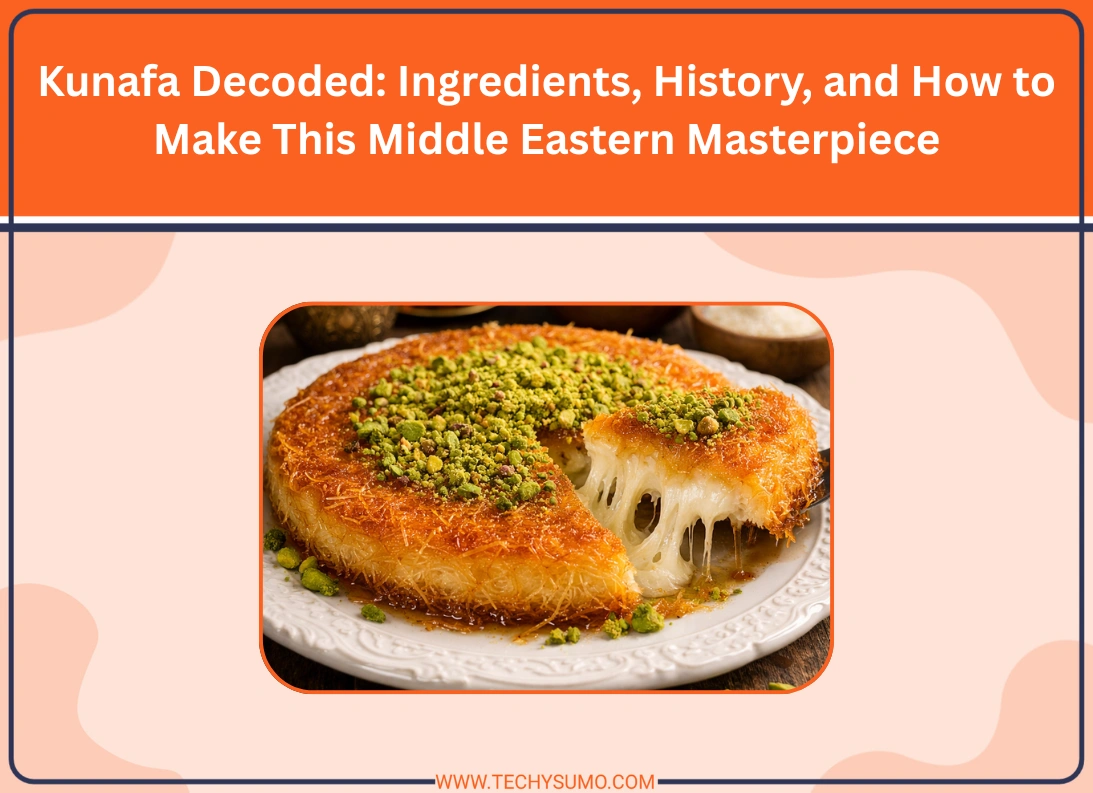
Ever wondered what is kunafa made of? This delectable dessert sits right at the heart of tradition. It’s served with intention and almost always shared, especially in the regions where the sun lingers a little longer and the evenings carry warmth.
All across Middle Eastern homes and bustling dessert counters, the sight of a golden, syrup-glazed tray is common, especially during festive periods. What actually sets kunafa apart is its dual personality: crisp yet soft, and rich yet balanced. Now we discover what textures keep it timeless.
Table of Contents
Tracing the Roots of a Beloved Classic
Kunafa’s beginnings are layered, much like the dessert itself. And there are unique stories that narrate its origins:
- Many point its origin towards Nablus in Palestine, where a cheese-filled version became deeply associated with local identity.
- At the same time, historical references also connect it to the Fatimid and Mamluk periods in Egypt. That’s when the intricate desserts gained prominence.
While its exact origin remains debated, what’s clear is its long-standing presence across the Middle Eastern region. But over centuries, the dessert has truly evolved in form.
Early versions prominently used semolina or soft layers. However, this gradually gave way to our now-recognised shredded pastry.
Also Read


The Essentials: What is Kunafa Made of
Despite its intricate appearance, kunafa firmly relies on a concise set of ingredients, with each one playing a specific role in shaping the final outcome. Moreover, the success of the dish lies in how these elements come together beautifully, rather than adding to the complexity.
- Shredded pastry (kataifi): It forms the crisp outer layers
- Butter or ghee: This ensures richness and gives it that signature golden finish
- Cheese or cream filling: Provides a soft, slightly savoury centre
- Sugar syrup: The syrup is lightly scented, typically with floral notes
- Pistachios: You can also add a final layer of texture and visual appeal (with pistachios)
Please note that the balance is pretty crucial. That’s because too much syrup overwhelms the dish, while too little can leave it dry. When you make it just right, every component will complement the other without competing for attention.
Bringing Kunafa to Your Own Kitchen
If you’re preparing kunafa at home, it surprisingly won’t require any elaborate equipment. But it does call for attention to detail. Each step builds towards the final texture. Here’s how:
- Begin with the syrup
You must begin by simmering some sugar, water, and a touch of lemon juice until it’s slightly thickened. Then allow it to cool completely before you use it.
- Prepare the filling
If you’re using traditional cheese, soak it to reduce saltiness. Then you need to drain it thoroughly to avoid any excess moisture.
- Pastry
Separate the strands and coat them evenly with melted butter or ghee, thus ensuring consistent coverage.
- Assemble
Press half the pastry into a greased pan, and then add the filling while leaving a slight border. At last, you can layer the remaining pastry on top.
- Bake to perfection
Cook it until the surface turns deeply golden and crisp.
- Finish while hot
At the end, pour the cooled syrup over your freshly baked kunafa. Also, let it settle (briefly) before you serve it, and top it with pistachios.
Variations that reflect region and creativity
Kunafa doesn’t exist in a single form. Its variations reflect the geography, regional preference, and our evolving tastes.
- Khishneh: It’s a coarser version with longer pastry strands and a pronounced crunch
- Na’ameh: This one’s much smoother and finer, offering you a softer mouthfeel
- Cream-based kunafa: It uses ashta instead of cheese for a slightly lighter finish
- Künefe: A Turkish adaptation, and often it’s served in smaller portions
In recent years, modern interpretations have added new layers to its identity. From the popular chocolate-filled versions to creations that have gained attention through viral trends. But it still manages to retain a distinct identity that feels both rooted and relevant.