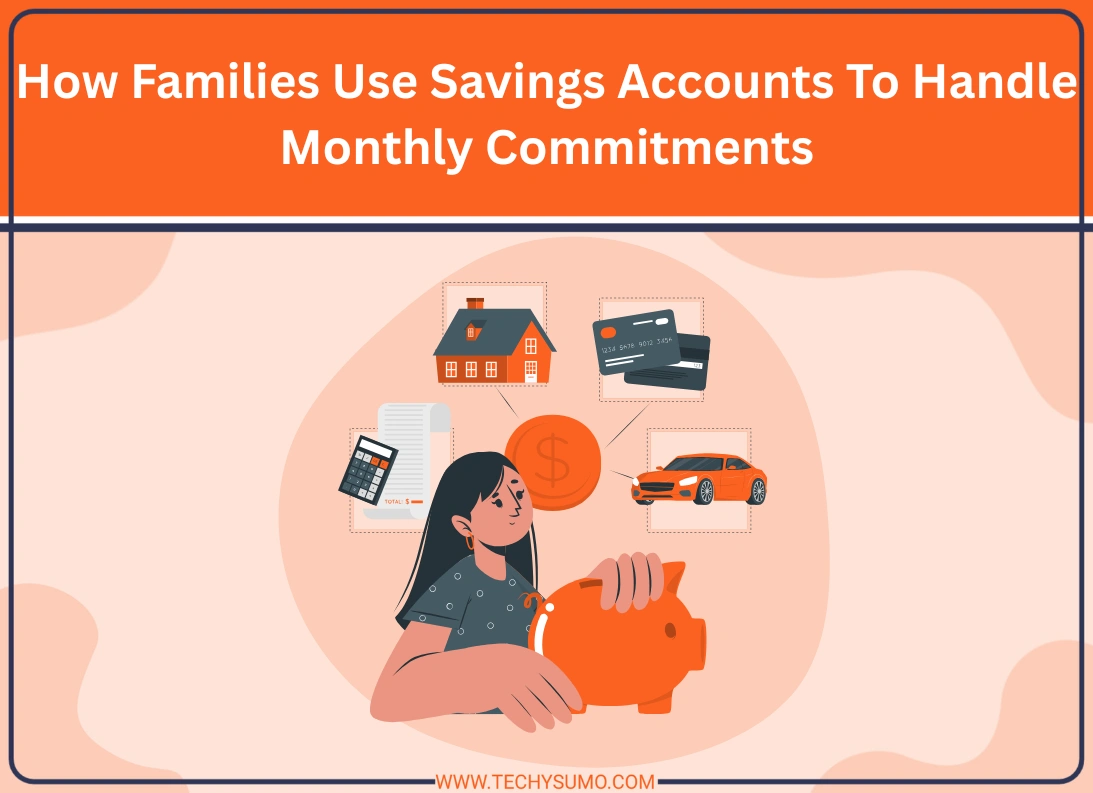
Managing monthly household expenses is less about one big payment and more about a steady stream of obligations. Rent or EMIs, school fees, groceries, utilities, transport, subscriptions, and medical costs all arrive on predictable schedules, even if income does not always feel predictable. For most families, a savings account acts as the central control point for managing this flow. Banks offer savings account features designed to support everyday money management, but how families actually use these accounts determines their effectiveness.
Table of Contents
- Why Savings Accounts Matter In Family Budgeting
- Separating Money By Purpose
- Handling Fixed Monthly Commitments
- Managing Variable Household Expenses
- Using Interest As A Small Support Mechanism
- Automation Makes Monthly Planning Easier
- Preparing For Irregular But Predictable Costs
- Teaching Financial Discipline Within Families
- Adapting As Family Needs Change
- Conclusion
Why Savings Accounts Matter In Family Budgeting
Families deal with layered expenses. Some costs are fixed, some fluctuate, and some appear only once or twice a year but still need monthly planning.
A savings account provides liquidity and safety while allowing families to park money meant for near-term use. Unlike long-term investments, savings accounts allow quick access without penalties, which is essential for household needs.
A digital savings account adds flexibility by allowing families to monitor balances, transfers, and expenses in real time, which is increasingly important in busy households.
Separating Money By Purpose
One common challenge families face is mixing all income and expenses in a single account. This makes it difficult to know how much money is actually available for different needs.
Also Read


Many families address this by maintaining dedicated savings buckets. One account may be used for monthly bills, another for school related expenses, and another for emergencies.
Handling Fixed Monthly Commitments
Fixed expenses such as rent, home loan EMIs, insurance premiums, and school fees require reliability more than flexibility.
Families often transfer a set amount into a savings account at the start of the month to cover these obligations. This creates a predictable payment pool and avoids scrambling close to due dates.
Knowing the savings account interest rate also helps families decide how much idle balance they are comfortable keeping without sacrificing returns unnecessarily.
Managing Variable Household Expenses
Groceries, fuel, utilities, and medical expenses vary from month to month. These costs benefit from a flexible buffer rather than exact budgeting.
Savings accounts work well for this because they allow families to smooth spending across months. Higher spending in one month can be offset by lower spending in another without disrupting fixed commitments.
Real-time tracking through a digital savings account helps families adjust quickly when expenses spike unexpectedly.
Using Interest As A Small Support Mechanism
While savings accounts are not designed for high returns, interest still plays a role in household planning.
Understanding the savings account interest rate helps families decide how much money to keep readily accessible versus moving surplus funds into short-term deposits or other instruments.
Automation Makes Monthly Planning Easier
Standing instructions can move money into savings accounts as soon as income is credited. Bills can be scheduled to auto-debit from a designated account.
This reduces reliance on memory and manual effort, which is particularly useful in households managing multiple responsibilities.
Automation turns planning into a system rather than a repeated decision.
Preparing For Irregular But Predictable Costs
Some household expenses do not occur monthly but are predictable over the year. School admissions, annual insurance renewals, festivals, and planned travel fall into this category.
Families often divide these costs by twelve and save monthly into a savings account. This prevents sudden financial pressure when the expense arrives.
Savings accounts provide the right balance of safety and access for such planned irregular commitments.
Teaching Financial Discipline Within Families
When family members can see how money is allocated and spent, it encourages accountability.
Some families involve older children in understanding how monthly commitments are managed. This builds early awareness of budgeting and prioritisation.
Digital access makes this visibility easier without exposing accounts to misuse.
Adapting As Family Needs Change
Family finances are not static. Schooling changes, healthcare needs evolve, and incomes rise or fluctuate.
Savings account usage should evolve accordingly. What worked for a young couple may not suit a growing family or a household supporting elders.
Flexibility is one of the core strengths of savings accounts when used consciously.
Conclusion
Savings accounts play a central role in how families manage monthly commitments, offering liquidity, structure, and peace of mind. With thoughtfully designed savings solutions, many banks continue to support families managing everyday finances, but the real effectiveness of a savings account lies in how intentionally it is used to support household priorities.