Walk into most architecture, engineering, or construction firms and ask where a specific project file lives, and you will likely get more than one answer. Someone will point to a shared drive, someone else will mention an email attachment from three weeks ago, and a third person might pull up a folder on their personal laptop that nobody else has access to. This is not a sign of a disorganised team. It is just what happens naturally when a firm grows and keeps adding tools without ever stepping back to look at how they all fit together.
Over time, this pattern creates something firms rarely notice until it starts costing them real time, systems that technically work on their own but do not talk to each other in any meaningful way. Design files sit in one place, field reports in another, financial data in yet another, and nobody has a single view of where a project actually stands. Fragmented AEC systems tend to accumulate slowly, one new tool at a time, until the firm eventually manages more platforms than projects.
Table of Contents
Why Fragmentation Quietly Slows Everything Down
The tricky part about this kind of fragmentation is that it usually does not show up as a single, obvious failure. It shows up as small delays that add up. A project manager spends twenty minutes hunting for the latest version of a drawing. A field engineer uploads photos to the wrong folder because four folders sound almost identical. An architect works off an outdated spec sheet because the update never made it past the office server. None of these moments feels like a crisis on its own, but over the course of a year, across dozens of projects, they quietly eat into margins and cause avoidable rework.
There is also a security angle that gets less attention than it should. When data lives in a dozen disconnected places, keeping track of who has access to what becomes nearly impossible to manage properly. Access control feels like an IT problem rather than a project problem, but in practice, the two are closely tied together. A subcontractor who should have lost access months ago might still be able to open sensitive files simply because nobody remembered to check.
What A Unified Platform Actually Changes
A unified data platform does not eliminate every workflow issue a firm has, but it does remove the guesswork about where things live and who can see them. Instead of stitching together storage, permissions, and version tracking across separate tools, everything sits within a single structure that the whole team can rely on.
Also Read

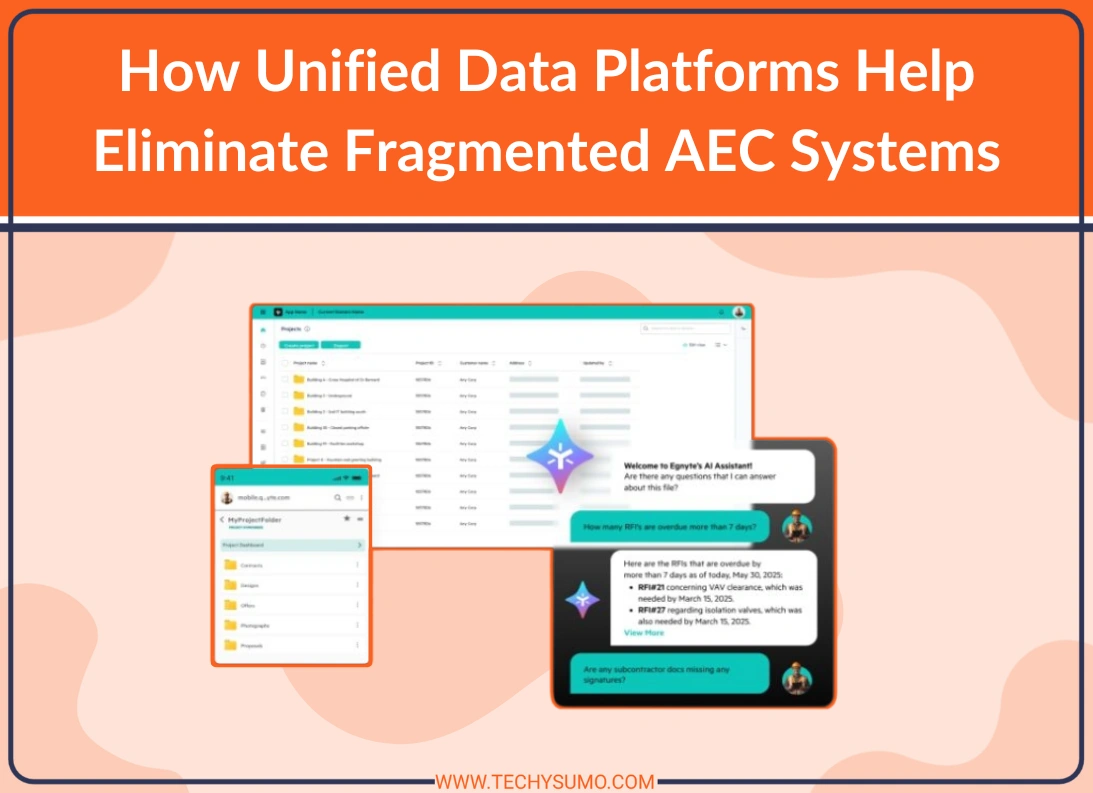
Egnyte approaches this by centralising project data across design, field, and back office systems, so a firm is not forced to reconcile five different sources of truth every time a decision needs to be made. Rather than replacing the specialised tools teams already use, the idea is to sit underneath them, connecting the data so it stays consistent no matter which application someone opens it from. That distinction matters because forcing teams to abandon tools they already know rarely goes well, whereas quietly connecting those tools in the background tends to be adopted without much resistance.
This kind of setup also helps with something firms do not always plan for: closing out a project. When files are scattered, closeout becomes a scavenger hunt through old drives and inboxes. With the full project history intact and searchable long after the team has moved on to something else, which matters more than people expect when a client calls months later asking about a change order from early in the project.
Bringing Fragmented Systems Back Together Takes Patience
None of this happens overnight. Firms with years of accumulated tools and habits cannot flip a switch and expect everything to align immediately. It usually takes a phased approach, starting with the areas causing the most friction and working outward from there. But the direction matters more than the speed. Fragmented AEC systems tend to get worse the longer they are left alone, simply because more tools keep being added to the existing mess.