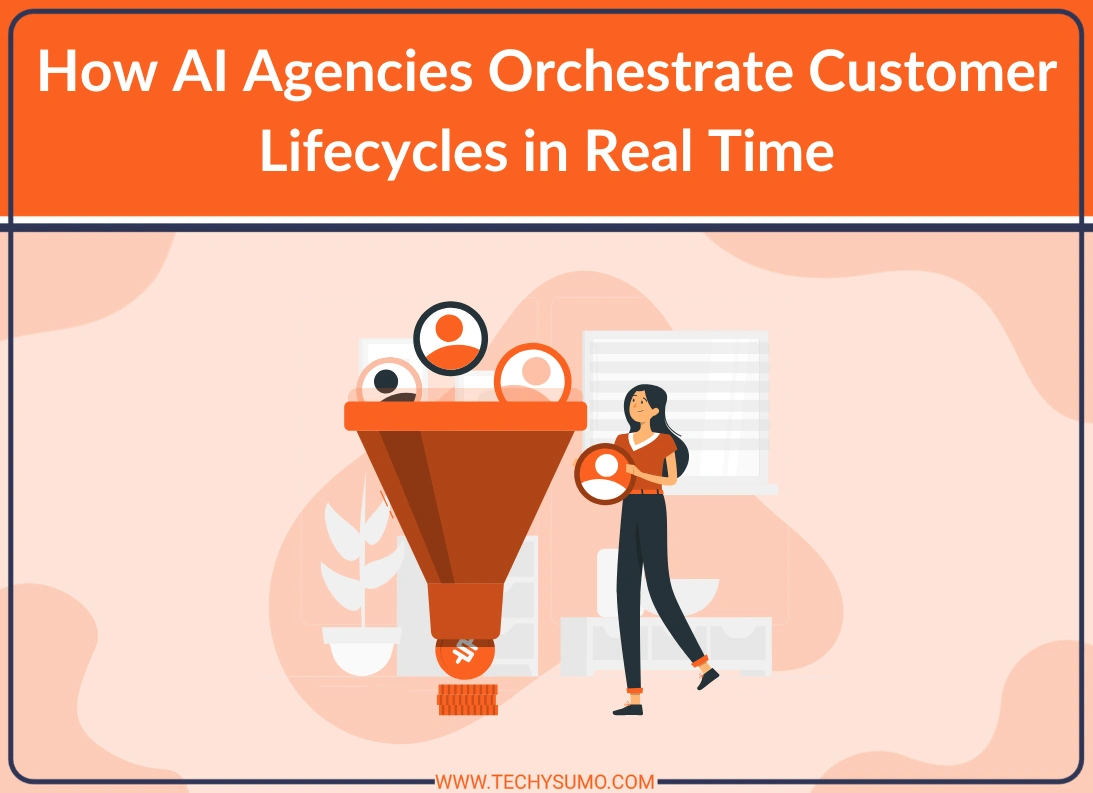
For years, marketers relied on flows, funnels, and rigid automations to guide customers from awareness to conversion. These systems were predictable, efficient, and—at the time—innovative. But today’s customers don’t behave in clean, linear steps. They jump between channels, switch intent in seconds, and expect personalized responses instantly. The static machinery of traditional automation simply can’t keep up. That’s why a new kind of marketing partner is emerging: AI agencies powered by intelligent, multi-agent systems that analyze, decide, and act in real time. Instead of waiting for triggers, these agents learn continuously and adjust the customer journey as it unfolds. It’s a shift that turns lifecycle management from a predefined map into a living, adaptive engine—and it demands marketers rethink everything about how campaigns are planned, orchestrated, and optimized.
Table of Contents
- Why Traditional Flows and Funnels Can’t Keep Up Anymore
- Meet the New Marketing Teammates: AI Agents Working Beside Humans
- The Five Stages of Agentic Maturity (And Where Most Teams Really Are)
- What Real-Time Orchestration Actually Looks Like in Practice
- The New Role of Marketers: Orchestrators, Strategists, and Quality Controllers
- How to Build an AI-Native Lifecycle Team Without Losing Control
- Conclusion
Why Traditional Flows and Funnels Can’t Keep Up Anymore
Old-school funnels assume customers move step by step—from seeing an ad to buying. But real journeys today don’t look like that. Someone might see a product on Instagram, read reviews on Reddit, watch a YouTube video, and come back days later through an email link. Traditional automations can’t react when people jump around like this. If a user suddenly shifts intent—like returning to a product page three times in one hour—static rules won’t catch it. A lifecycle marketing agency uses AI to track these tiny signals in real time. It understands when someone is getting close to buying and adjusts messages instantly. That’s why funnels alone no longer work in a world where behavior changes every minute.
Meet the New Marketing Teammates: AI Agents Working Beside Humans
Today’s top marketing teams don’t work alone—they’re supported by AI agents that act like new digital coworkers. Each agent has a specialty. One analyzes customer data in seconds, another writes ad copy, another tests hundreds of campaign variations, and another tracks where each customer is in their journey. For example, while a human strategist plans a campaign, an AI agent might create multiple email versions, and another agent automatically sends the best-performing one. These agents even “talk” to each other, handing off tasks like a relay team. This frees marketers from manual work like pulling reports or scheduling posts, so they can focus on big ideas and creative strategy instead of routine execution.
The Five Stages of Agentic Maturity (And Where Most Teams Really Are)
AI in marketing grows through five levels, from simple helpers to fully autonomous systems. Stage 1 is basic assistance, like tools suggesting email subject lines. Stage 2 reacts to behavior—think AI showing product recommendations after someone clicks. Stage 3 becomes proactive, predicting when a customer might buy or churn and adjusting messages automatically. Stage 4 lets agents coordinate tasks together, such as adjusting ad spend while updating email flows. Stage 5 is a fully autonomous ecosystem where AI manages entire lifecycles with minimal human input. Most teams today are stuck between Stage 2 and Stage 3, using helpful tools but not yet unlocking AI’s full power to guide real-time journeys.
What Real-Time Orchestration Actually Looks Like in Practice
Real-time orchestration means your marketing doesn’t wait for a weekly campaign or a fixed automation flow. Instead, AI agents react the moment a customer does something. For example, if someone lingers on a pricing page, an AI agent can instantly show a comparison chart, trigger a chatbot, or send a short discount email—without a marketer touching anything. If ad costs spike, another agent can shift budget to a better channel on the spot. Creative agents can even swap out headlines or images based on what’s performing best that hour. Instead of “set it and forget it,” it feels like an always-on system that watches every signal and adjusts the entire customer journey in seconds.

The New Role of Marketers: Orchestrators, Strategists, and Quality Controllers
In an AI-powered world, marketers are no longer just executing campaigns—they’re guiding them. Instead of manually sending emails or adjusting ad bids, they set objectives, define brand tone, and supervise AI agents handling the details. For example, a marketer decides the messaging for a product launch while AI tests dozens of creative variations across channels in real time. They review performance dashboards, approve strategic shifts, and ensure the system aligns with brand values. Human judgment, intuition, and creativity become the differentiators, while AI handles repetitive or data-heavy tasks. The result is a partnership where marketers amplify their impact rather than compete with machines.
How to Build an AI-Native Lifecycle Team Without Losing Control
Adopting AI in lifecycle marketing requires more than technology—it demands thoughtful structure and oversight. Start by defining clear roles: which tasks AI handles, which require human approval, and who monitors outcomes. Establish governance frameworks with guardrails to maintain brand voice, ethical standards, and customer trust. Focus first on Stage 2 (Reactive Recommendations) and Stage 3 (Proactive Recommendations) to gain confidence in AI capabilities before pursuing full automation. Encourage a culture of human-AI collaboration and build feedback loops to improve performance continuously. This ensures marketers stay in control, guiding strategy while AI executes with speed and precision.
Conclusion
The shift from rigid funnels to AI-driven lifecycle orchestration marks one of the most profound changes modern marketing has ever seen. What once relied on static rules, fixed segments, and pre-programmed flows is now becoming a living ecosystem powered by adaptive intelligence. But the brands that will thrive aren’t the ones simply adding new AI tools to old processes—they’re the ones reimagining how their teams think, collaborate, and operate. Real-time marketing requires a new mindset, one where humans guide strategy and creativity while AI handles the complexity of observing, predicting, and optimizing every moment of the customer journey. This isn’t about replacing marketers—it’s about amplifying their intuition, freeing them from repetitive tasks, and giving them superhuman clarity into what customers want.